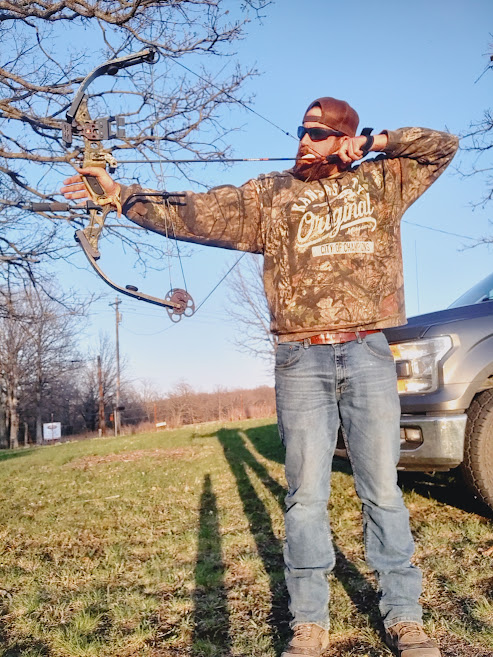
When she was about 11 years old, my youngest cousin Sydney innocently asked me one of the most poignant, thought provoking, and downright puzzling questions I’ve ever been asked. To put it in perspective just how remarkable that question was, she is now getting ready to graduate high school and I still do not feel that I have provided an adequate answer to her question. I had recently started my first “big boy” job out of college, working for the conservation department and putting my newly acquired Wildlife Conservation & Management degree to good use, when her family, who was in from out of state, came to visit my workplace. We were admiring a small green snake we had found just outside the office when she turned to me and asked the following question:
“Steven, if you claim to love animals so much, why do you hunt them and kill them?”
In the moment I was caught completely off guard. My position as a hunter and outdoorsman while also being someone enamored with nature and wildlife had never been so directly and succinctly challenged like that. I certainly hadn’t expected such a challenge to come from a child, let alone my own little cousin. It was a question that I hadn’t really given much thought or consideration to at that point in my life, and I definitely didn’t have a good answer for it that could be broken down for the understanding of an 11 year old. How could I explain to her that these things don’t have to be mutually exclusive, that it is not a dichotomous relationship between the two? Would she have even understood a word like dichotomous at that age? More to the point, why did I claim to love animals and also be willing to hunt them and kill them? I didn’t have a quality answer for her, but that singular question has plagued me for years, so I am going to try my best to answer it now.
There are many different directions I could go in trying to justify the necessity of hunting and killing animals; the resources they provide, the natural act that is hunting, or even the important role that hunting plays in conservation in terms of managing and maintaining healthy wildlife populations, balancing predator/prey relationships, etc. I could dive into the technical arguments, pointing to how the North American model of conservation centered around regulated hunting has brought numerous species back from the brink of extinction (see deer, turkey, and elk populations for starters). Additionally, many state and federal sales taxes specifically tied to hunting, shooting, and outdoor gear (see – the federal Pittman-Robertson Act and Design for Conservation Sales Tax in Missouri), along with revenues from the sale of hunting permits, are what finance a great multitude of conservation and habitat programs. I could pull up one of those food web charts we’ve all seen in our biology textbooks and explain the importance of managing each species of animal and how it interacts with the others, noting that we have a responsibility at the top of the food chain to maintain balance within ecosystems. I could even make the argument that it is inevitable that all animals will eventually die, and comparatively the few fleeting moments of suffering that an animal may experience at the hands of a hunter are nothing compared to what that animal would face as a “natural” death, that it is extremely rare that wild animals simply get old, lay down, and pass peacefully. Be it predation, disease, famine, competition, etc. death in the natural world is violent, it is cruel, and it is incredibly unpleasant to think about.
While all of those things are important and valid as they relate to hunting, they’re still only a response to the latter half of the question. As to the former half, there is an equal necessity for respecting and revering the natural world of which we are truly only a small part. Sitting at the top of the food chain we as humans hold a certain degree of responsibility for taking care of the natural world through both conservation and preservation of those natural resources, including wildlife. Again, that really only speaks to one half of the question. So how does someone like me find themselves in the position of having to marry these two seemingly contrasting ideologies?
Since Sydney asked this question directly to me, I figure my best approach to answering it would be through a little self-evaluation, exploring where I found my love of animals and also my love of hunting and examining the point at which these interests of mine intersect. They are both responsible for my choosing to pursue a wildlife degree in college and driving me toward a career in the wildlife and conservation field. From a young age I was always fascinated with animals, but I also grew up in a hunting family in which some of my earliest memories can be tied back to trudging out into the woods with my dad while he bow hunted. I believe that it has been through my love of animals that I have always hunted with a certain reverence and a respect for sound hunter ethics. I think my interest in and love of animals has contributed to my skills and understanding of animals as well, which has made me a better hunter, which should not be so easily overlooked in this process.
A Love of Animals and Nature
As a child I was always enamored with animals, from family pets and pointing to deer out in fields whenever we were in the car to the interesting and exotic creatures I saw at the zoo or on television. I enjoyed feeding sugar cubes to my aunt’s horses and playing with the litany of cats and dogs they had roaming around their farm. Occasionally we would have access to satellite television, where dad and I would find ourselves engrossed in the many hunting and fishing shows on The Outdoor Channel. One of my favorite childhood programs was the work of the infamous Kratt Brothers and their quirky lemur sidekick and show’s namesake, Zoboomafoo. I begged to stay up late and watch the late night talk shows when they would have guests like Jack Hanna who would bring all kinds of exotic wildlife onto the set. Steve Irwin’s raw passion, energy, and excitement for handling some of the world’s most unique and dangerous wildlife species still resonates with me to this day. I remember arguing relentlessly with my best friend over who was better, Steve Irwin or Jeff Corwin (I was obviously Team Irwin while he was Team Corwin).
I thought that what they got to do and the animals they got to interact with on a daily basis was just the coolest thing in the world. They had me hooked on the idea of being a zookeeper or a veterinarian when I grew up, something that would give me the same exciting opportunities that it gave them every day. Thinking along those lines I went and job shadowed our family veterinarian for a day in middle school. While I thoroughly enjoyed interacting with all the animals that came through his office, and learned a lot about the practice of veterinary medicine, I quickly realized that I was probably not cut out for certain aspects of the job, like performing surgeries or wrangling unruly critters. I also learned just how much extra schooling was required to become a veterinarian, and I did NOT want to be in school that long!
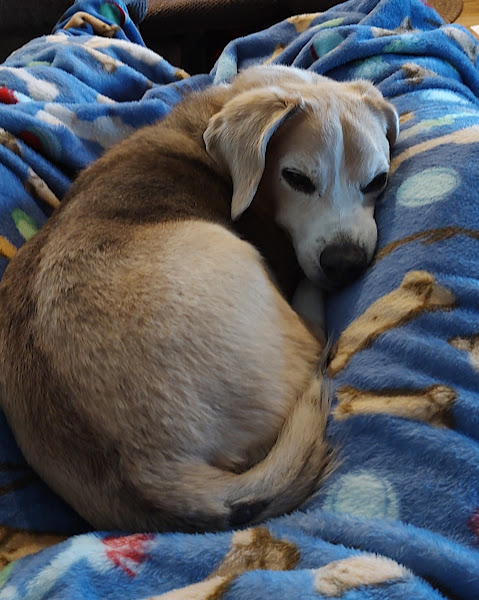
I grew up around pets as well. We had different dogs over the years and I loved each of them dearly, I cared for my friend’s hamster from time to time, and one Easter my aunt and uncle gave us some eggs to hatch that had been internally dyed so that when the chicks hatched each of them were a different color. That same aunt and uncle also had horses, goats, and rabbits that they raised on their farm, and I enjoyed interacting with those animals. I don’t really know why some animals are off the table as food in the civilized world, but from an early age I was taught the harsh realities of the purpose and the lives of certain livestock such as cattle and pigs and chickens, that those were meant to be eaten. In fact, that was ultimately the demise of those baby chicks I raised. In what some might consider a hard lesson, I learned that it is in fact possible to raise and care for a creature while it is alive and also stomach taking its life and consuming it.
A Family Tradition
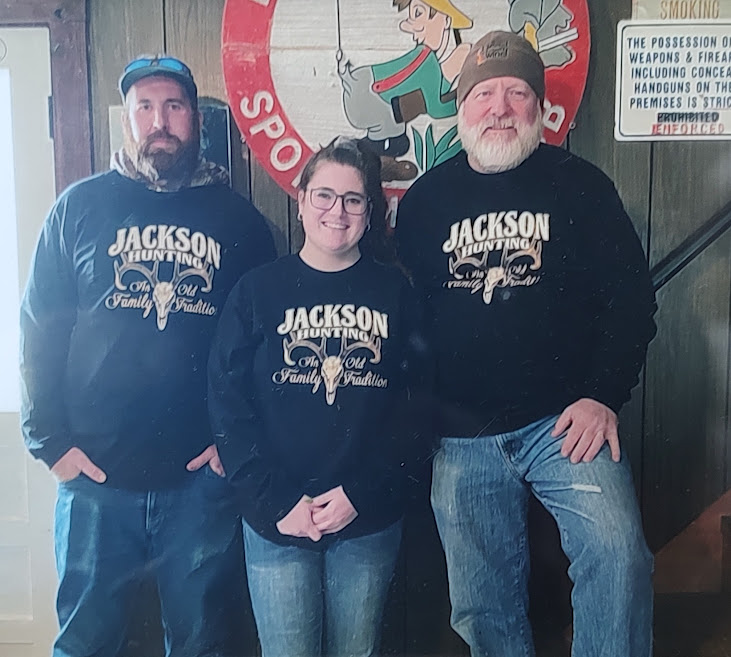
My dad was an avid bow hunter, and some of my earliest memories are of spending time in the deer woods with him. I admired the 10 point buck mounted over the staircase in our house, his first deer, and longed for the day when I could get one of those of my very own. To this day my dad keeps a picture on his nightstand of him helping me catch my first fish. You could say I was ‘hooked’ from an early age. Hunting and fishing have always been more than just a hobby for my family. It has primarily served as a source of providing food. While the rack hanging on the wall looks nice, the true reward came in the form of the meat that provided our family with many meals. Hunting is not about senseless, indiscriminate killing. If you are going to take the life of another living creature, you had better have a reason. Those reasons can vary, from putting food on the table to managing wildlife herds, to balancing the predator/prey equation. He taught me to never take from the land more than is absolutely necessary to accomplish whatever the goal of the hunt happens to be. I was taught to respect the process of the hunt, to practice sound hunter ethics, and instilled in me a strong consideration for hunter safety and respect for any and all associated rules and regulations.
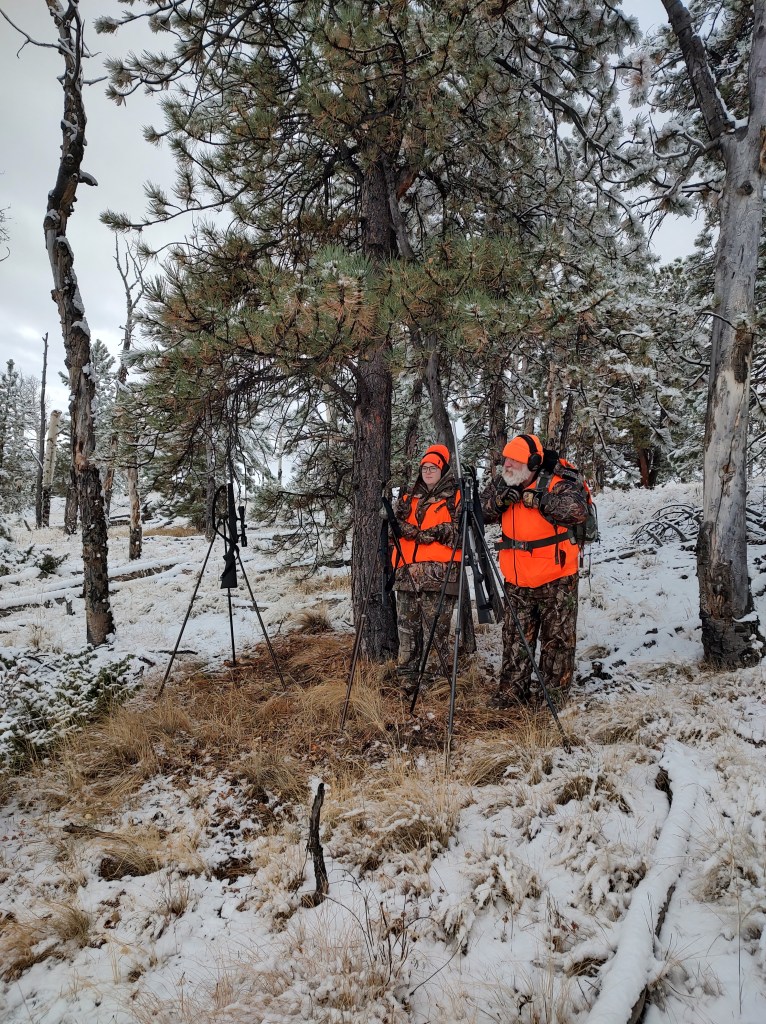
My dad also taught me that hunting is not always about the harvesting of the animal itself, but also the experience. Some of our fondest memories in the woods have come from hunts that did not result in a successful harvest. We should always be grateful and give thanks for the opportunity to immerse ourselves in God’s creation and enjoy the natural world as a blessed gift. Through his example I have learned that there are more gratifying rewards to be gained from hunting than the harvest itself. I had a front row seat to that on our recent elk hunt in Colorado. My dad and I have had our share of successful harvests of animals over the years, but unfortunately my sister has not fared as well. Watching her struggle over the years to harvest a deer had been trying to say the least, but when the opportunity presented itself she was able to successfully harvest an elk. While neither dad nor I were able to get a shot when the elk herd appeared, my sister was able to finally harvest an animal. Dad and I both were infinitely more excited for her than we could ever be for ourselves. Watching that passion for this time-honored tradition grow in another budding hunter was a truly magnificent reward.
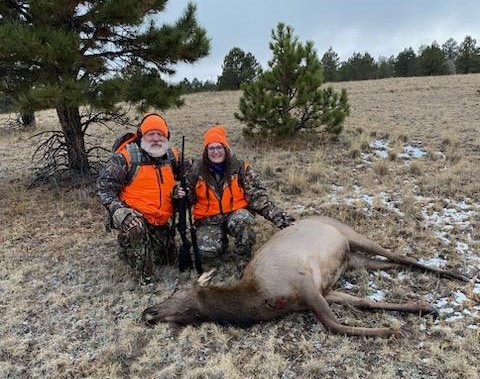
I would be remiss to exclude the women in our family and the role that they play in our family’s hunting tradition, even though they are not necessarily hunters themselves (with the notable exception of my sister). As the masters of our kitchens they are often responsible for preparing and cooking the harvests that we bring home, even when it was many years into their marriage before my dad learned that my mom is not a huge fan of deer meat. Despite her personal disinterest in it, she would nonetheless patty out deer burger, prepare deer roasts, and use that deer meat in a number of her dishes. There is also the element of holding down the fort while we are away on our hunting excursions, as they afford us the opportunity to sacrifice small snippets of valuable family time to pursue our hobbies and interests afield without giving us too much grief. Honey-do lists tend to get put on hold in the fall, and events get reprioritized around the various hunting seasons. For these reasons, I consider the women in our family to be equally yoked in our deep rooted hunting traditions.
A Source of Food
What greater renewable resource is there other than wild game? By practicing sound hunter ethics, abiding by hunting regulations and limitations, and never taking more than is absolutely necessary, wild game can become a reliable and replenishing resource of food. Additionally, with all the debate and controversy that surrounds “commercial” farming and ranching, the conditions that livestock are sometimes subjected to, the arguments pertaining to grain fed vs. grass fed, the presence or absence of hormones or antibiotics (a debate that I am not about to get into here), there simply is not a greater example of an all-natural source of protein than wild game. Wild game is unquestionably a nutrient rich and often lean source of meat. I have had conversations with personal trainers and nutritionists who all too often like to steer their clients away from hefty diets of fatty and/or red meats, preferring instead to focus on meats like chicken as a relatively safe source of protein. Even they acknowledge the benefits of mixing wild game meat into a dietary plan as a high quality protein source without a lot of the negatives that can come with the beef and pork found in the grocery store.
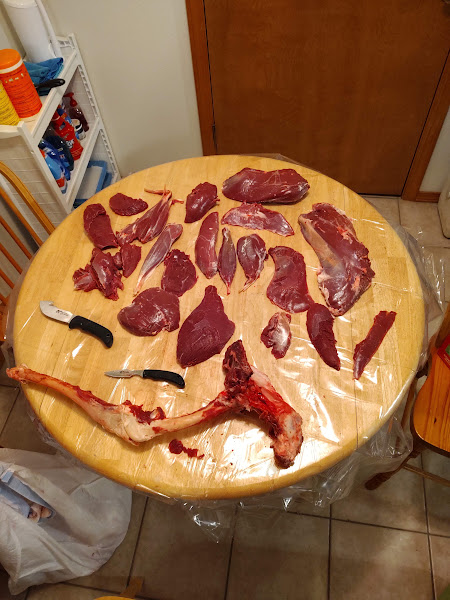
While some people do undoubtedly hunt almost purely for trophy, I was raised to prioritize hunting as a source of providing food. Don’t get me wrong, I’d be over the moon thrilled to shoot a trophy deer, but I also won’t pass up the opportunity to harvest a doe for the sake of putting meat on the table. Whether its deer, turkey, squirrels, ducks, quail, you name it, most everything I hunt is hunted for the primary purpose of eating. Now, there are exceptions to that rule, such as coyotes or raccoons, which I will take as a manner of predator management in order to help maintain the balance between predator and prey populations within the ecosystems I hunt.
Therapy for the Soul
I touched on a lot of this stuff in Finding Jesus in the Field so if you’ve read my previous post parts of these next couple of paragraphs may sound familiar, but I want to include those thoughts here as they also fit well with this topic. I think Nick Offerman’s character Ron Swanson on NBC’s Parks and Recreation said it best when he said that, “fishing relaxes me. It’s like yoga, except I still get to kill something.” This sentiment is equally applicable to hunting. In hunting much like in yoga, there is no shortage of peace to be found. Sitting for hours on end in a deer stand with nothing but the ambient sounds the natural world offers, in my opinion, is an opportunity for some of the best meditation one can find. It can also provide for the necessity to stretch muscles you didn’t even know you had if you sit there too long, both physically and mentally! There’s also plenty of opportunity for reflection as well. I’ve utilized these moments to give gratitude for all the things life has given me, to stew on things that irked me, and even compose my apologies for mistakes that I’ve made. There have been moments when my decision to venture out into the woods had absolutely nothing to do with hunting itself, but rather it was a deliberate escape from civilization when I have been overwhelmed by stress. Of course I still take the gun with me, just in case I chance upon an instance of actually hunting. No matter what is going on in my life I can always lock it away in the truck as I venture out into the woods. Sure, it will still be there when I get back, but by that point I will (hopefully) have reached some clarity and better understanding. At the very least I will have acquired the confidence to face whatever awaits me.
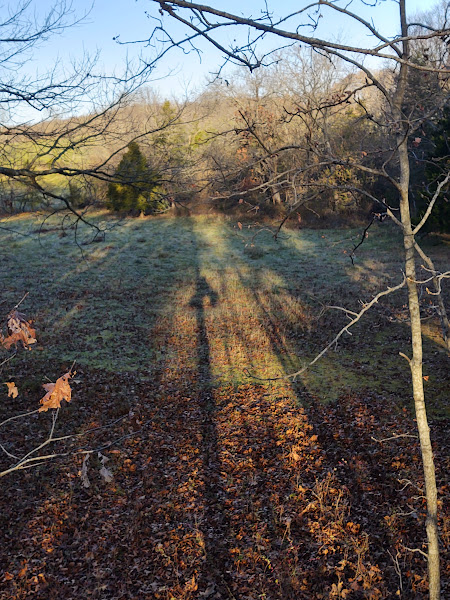
I consider myself fortunate to have hunting to turn to when this world gets too big. It is in these moments that many other people turn to alcohol and drug abuse and countless other self-destructive practices of managing stress that have proven infinitely more detrimental than the relatively benign practice of wandering out into God’s creation for a couple of hours. I hear people all the time refer to the things that they find particularly pleasing or soothing as their “aesthetic.” For me there is no greater aesthetic than sitting in the middle of the woods as the season’s first official snow falls silently around me. It is a truly one-of-a-kind experience that has on more than one occasion moved me to the verge of tears. On opening morning of one particularly memorable Fall Firearms Season in Missouri, I sat in the stand in the middle of a pre-dawn thunderstorm. This experience could be downright frightening for most as the wind whipped rain across my face while lightning flashed all around me and the thunder clapped directly overhead. Most intelligent people would know better than to strap themselves to a tree atop what is essentially a 20 foot metal lightning rod, but not me. I merely hunkered down in my jacket and eagerly anticipated the excitement of the deer woods that the sunrise was sure to bring. In the midst of the raging storm, I don’t think I have ever been so calm.
Where I Belong
For all my insecurities, shortcomings, mistakes, and regrets, I have never felt so at home than I have in the woods. Growing up I struggled to find the things that I was really good at, and that I could stick to long enough to really hone that craft. I enjoyed a lot of things and took up many different hobbies as a kid, but I could never truly identify with any one thing. I love sports and grew up playing soccer. I tried my hand at baseball, football, even basketball, but I just seemed to lack the necessary athletic abilities to really make pursuing athletics bear any real fruit. I’ve always thoroughly enjoyed playing video games, but as my friends will probably tell you I’m a far cry from being a top notch gamer. I am competent enough and just mechanically inclined enough to handle basic maintenance and repairs on vehicles, but I wouldn’t consider myself a ‘car guy’ the way a lot of people are. I was hardly a model student, even in high school and certainly not in college. I could do well enough to pass, but I wasn’t exactly bucking for the Dean’s List every semester (at least not the GOOD Dean’s List). I think it’s also fair to say that I enjoy talking politics as well, discussing and debating with my friends and family about the topics of the day politically, and I make no secrets on social media about where I stand politically. This annoys some (okay, A LOT) of my friends on Facebook I’m sure, but I am open and honest about my values and my worldviews. That being said, don’t expect me to ever announce a campaign for any form of political office, as I have absolutely no interest in subjecting myself to that wild and wacky world. They say it’s who you know and not what you know that gets you places in politics and, well, I know too many people that have enough stories to tell on me that would derail any potential political aspirations that I may have had anyway. When it comes to the workforce I have a lot of basic understandings and carry with me a willingness to learn new skills, but I have never really had that niche skillset or ability to pinpoint just what I am good at. Suffice it to say that in everything that I’ve done in life, I have been more of a Jack of all trades, master of none type of person. I can lend a hand, but I can’t necessarily lend any expertise.
As someone who is fairly introverted it has been very easy for me to become engrossed in hunting and fishing. These are largely individual practices that do not require much (if any) interaction with another human being at all which suits me just fine. While I have dabbled with the aforementioned hobbies and interests and I believe I have enough knowledge and understanding of those things to consider myself a relatively well-rounded and intelligent person, I don’t carry the same confidence or depth of knowledge with them that I do with hunting and fishing. I’ve often said that if there’s a season for it in Missouri, chances are I’ve hunted it. I may not have necessarily succeeded, but I have at least pursued it. I can talk all day long about hunting and fishing, swapping stories with friends, family, or even strangers and not feel like the dumbest person in the room. I’m probably not the smartest person in that room, but I can hold my own in terms of knowledge and experience in the outdoors.
Do What you Love and you’ll Never Work a Day in your Life
As I mentioned earlier, my love of wildlife and my passion for hunting are what drove me to pursue an education and subsequently a career in the outdoors. As excited as I get for setting out into the woods or the marsh to pursue wild game, I tend to get equally as excited working to create, provide, and enhance suitable habitat for wildlife. Scaring up a turkey hen and her poults on a property we had previously implemented some timber stand improvement on is every ounce the equivalent reward of shooting a big gobbler during spring turkey season. Just the other day we were planting trees on a property that we have been working on for a couple of years now doing timber stand improvement, edge feathering, tree and shrub planting, and invasive species management, and we heard the calls of a pheasant on the property. That same day we also kicked up a covey of quail. This was particularly exciting because this property is in an area that doesn’t really have a lot of pheasants or quail, as most of the land in that area is in agricultural row crop production. The physical manifestation of the fruits of our labor providing suitable habitat for these upland bird species gave us the same shot of adrenaline and dopamine that a successful hunt usually does, and it serves as a reminder for just why it is that we do what we do for a living.
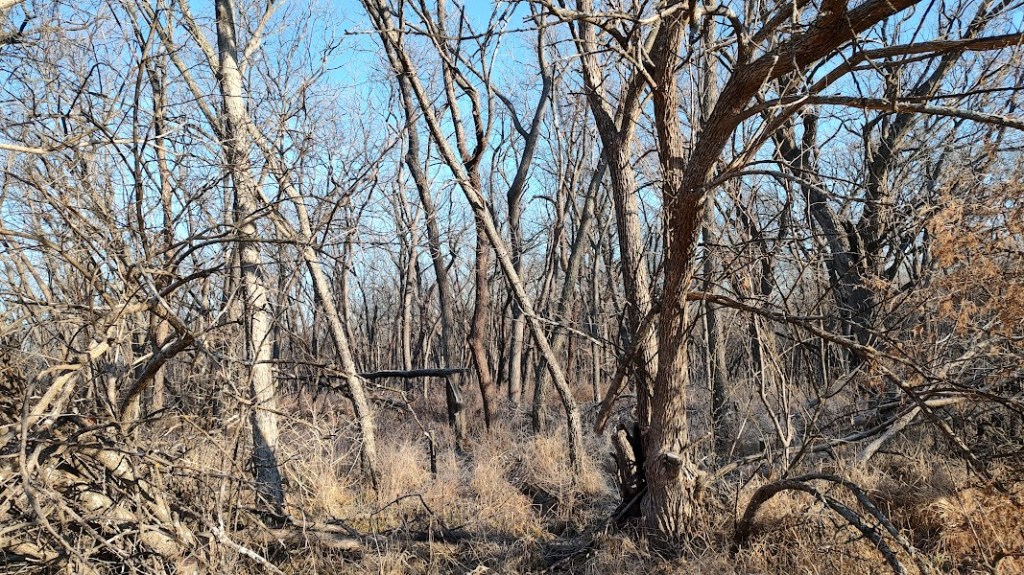
Conservation and habitat work is undoubtedly a physically demanding practice. The weather is rarely ideal, the hours can be long, and the labor can be exhausting. On top of all of that, it generally doesn’t pay too great. I knew going in that this was not a career path for getting rich. Only a fool would go into this field of work for the money. As long as I can pay my bills and live at least somewhat comfortably I’ll be happy. For me, the reward of providing suitable habitat and promoting healthy wildlife populations is far greater than any financial gain I could pursue. I’ve never been much of one to be satisfied cooped up behind a desk or crammed in a cubicle day in and day out; I’d much prefer to be outside in the elements than subjected to an office where the climate is controlled almost exclusively by a panel on the wall. I’d rather troubleshoot a problematic chainsaw than unjam an office printer any day. It is much preferred to put in my weekly 40 in a place where internet connectivity issues have minimal impact on productivity.
I have a particular appreciation for the wide array of disciplines that conservation work encompasses. To be an effective manager of the untamed wild one must be equal parts weatherman, farmer, botanist, biologist, mechanic, chemist, historian, critical thinker, problem solver, and decision maker. You also have to maintain a certain level of physical fitness, possess at the very least some organizational skill, and be flexible enough to adjust to an ever-changing set of circumstances. All of these things combined are enough to keep the job fresh, as no two days are ever the exact same. You have to be able to troubleshoot issues with equipment and maintain tools to keep them in working order. All too often plans are changed on the fly for a variety of reasons, chiefly that that which looks good on paper hardly ever fleshes out in application. Acres managed and chemicals applied are generally rough estimates, as is the amount of time needed to complete the job.
Answering the Question
With all of that said, I feel like I am finally ready to provide Sydney’s most thought provoking question with a substantive answer. I am both able to claim a love for animals AND a passion for hunting and killing them because of my understanding and recognition of the circle of natural life, that in the end all living things will cease to live, and while I hate to see an animal perish I also know that the ones that do so at my hand do so more quickly than they otherwise inevitably would to far less pleasant natural forces. I recognize that animals of all kinds carry a tremendous amount of value, both in their life and in their death. Animals can be a resource of food, of clothing, and of many other uses in our daily lives, and through sound practices that resource can be maintained as renewable. The intrigue, the passion, and the challenge of pursuing wild game has become a large part of my personal identity where I have found countless opportunities for growth, education, therapy, confidence, and yes even sustenance. A love of animals coupled with the pursuit of wild game is a rich family tradition that I hope to continue in future generations. I believe that we as humans carry the responsibility at the top of the proverbial food chain to manage and maintain an ecological balance in the natural world around us through sound hunter ethics and putting back into the land just as much if not more than we take out of it, and the conservation practices that include hunting are a part of that equation. I would also never suggest that someone who has no interest or desire (or stomach) for hunting go out and do so themselves. Hunting is not for everyone, and I’m okay with that. But it is for some of us, and we will continue to do so until the end of time.
 The Hunting Lodge
Another Fantastic writing, Steven!
LikeLike