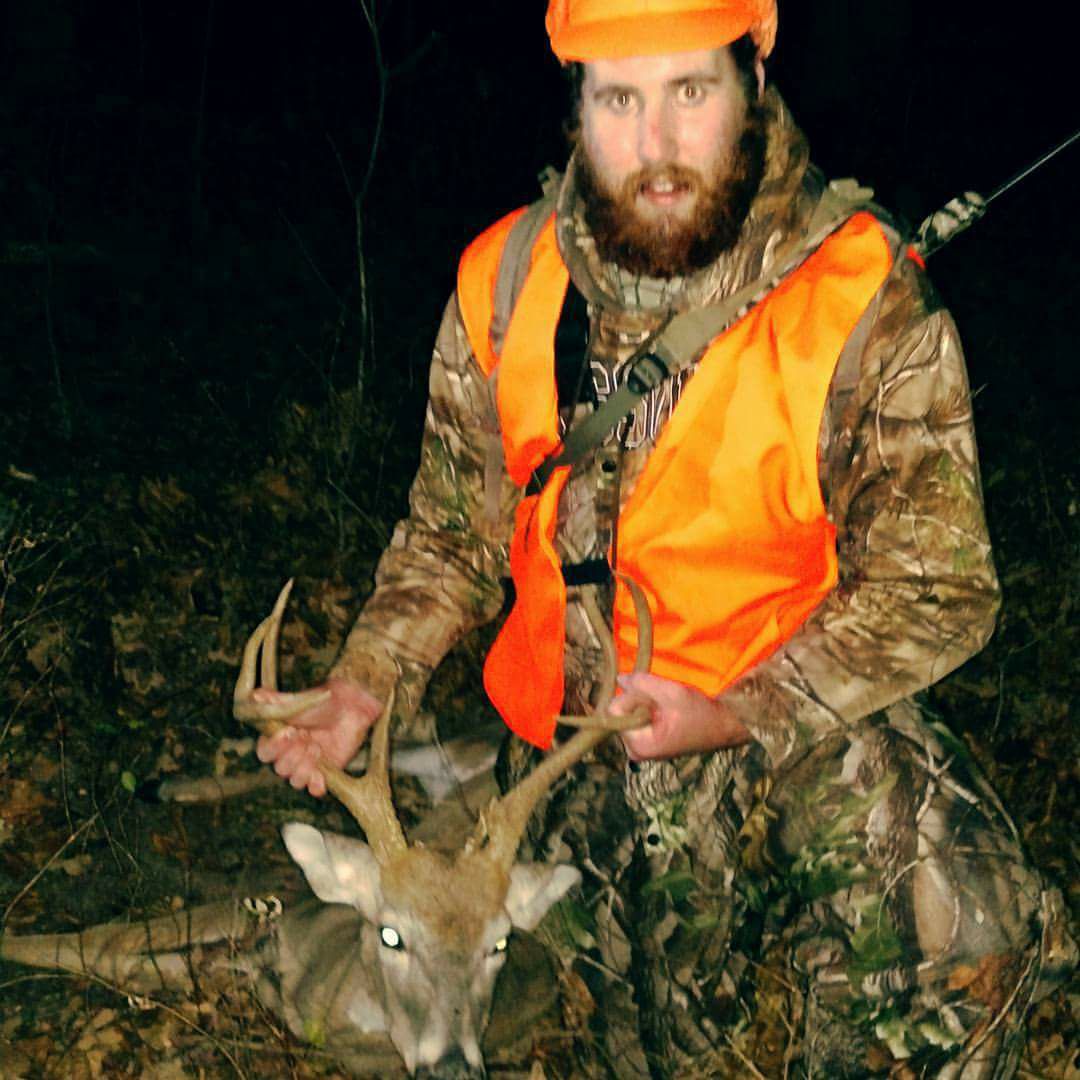
There has been a long standing debate amongst hunters concerning whether or not the .223/5.56 caliber is actually an effective and reliable caliber for harvesting deer. This debate is largely a product of the popularity of the AR-15 rifle, known more as a sport shooting and defense rifle rather than a hunting rifle. This conversation can be a healthy one in terms of sound hunter ethics, because as outdoorsmen we want to ensure that we are effecting clean kills in the field. The last thing anyone wants to do is wound an animal and not be able to recover it quickly and efficiently. Obviously there are many different caliber options that are probably better suited for deer hunting, and if you have any doubts or concerns about whether or not any particular caliber is going to supply the desired result, it is best to stick with one that you are more comfortable with.

Why Go Small???
There are several reasons why a hunter might choose to go the route of a smaller caliber such as the .223/5.56. Up until the last couple of years, due to its popularity for a wide variety of uses, ammo for this caliber has been pretty widely available and a variety of styles and weights. For example, I have next to me three different boxes of .223 that are all different grains and bullet types. Box one is 45 grain jacketed hollow point, box two is 55 grain jacketed soft point, and box three is 73 grain FTX Critical Defense. We’ll break these down later as to their efficacy in the deer woods. Another reason one might choose this caliber is because of its size and notably lesser recoil compared to larger calibers. This can be particularly beneficial to young or inexperienced hunters who might be inclined to have a fear of that kick negatively affect their shot. The last reason I’ll throw in is again the AR-15 platform itself, which provides a couple of enticing benefits to hunters. The first being that it is a semi-automatic, making it faster and easier to send multiple shots down range, if necessary. The second is magazine capacity. Compared to lever or bolt action rifles ARs are capable of carrying larger magazines and thus more bullets. The big caveat to that is that most states have imposed capacity limits for hunting, so check your local wildlife code before slapping that 30 round mag in and hitting the woods. This also opens up a subcomponent of the debate as to whether or not a good ethical hunter really ought to be firing that many rounds that quickly when deer hunting, but we’ll save that conversation for another day.
The best case that I can make in this argument is almost purely anecdotal, leaning heavily on my own personal hunting experience, particularly with this caliber. The first rifle I bought just so happened to be a Stevens Model 200 bolt action .223, and full disclosure, I chose it almost exclusively because it has the name STEVENS on the bolt and, well, that’s my name! Beyond that I have actually come to really like this rifle and I have harvested several deer with it. That being said, I have had a couple of presumed misses and one big doe that I can confirm I hit, but was never able to recover. I have hunted and I suppose you could say experimented with a variety of rounds, which have helped shape my conclusions on deer hunting with .223. Through these experiences I have learned a lot of valuable lessons when it comes to deer hunting with a smaller caliber. Some of them good, and naturally, some of bad and still very hard to swallow. However, I will attest that there are three very important factors for hunting deer with a .223/5.56 caliber rifle: Ammunition selection, distance of shot, and shot placement. Obviously these things are going to factor into deer hunting regardless of caliber choice, but for they become vitally important when dealing with small caliber rounds.
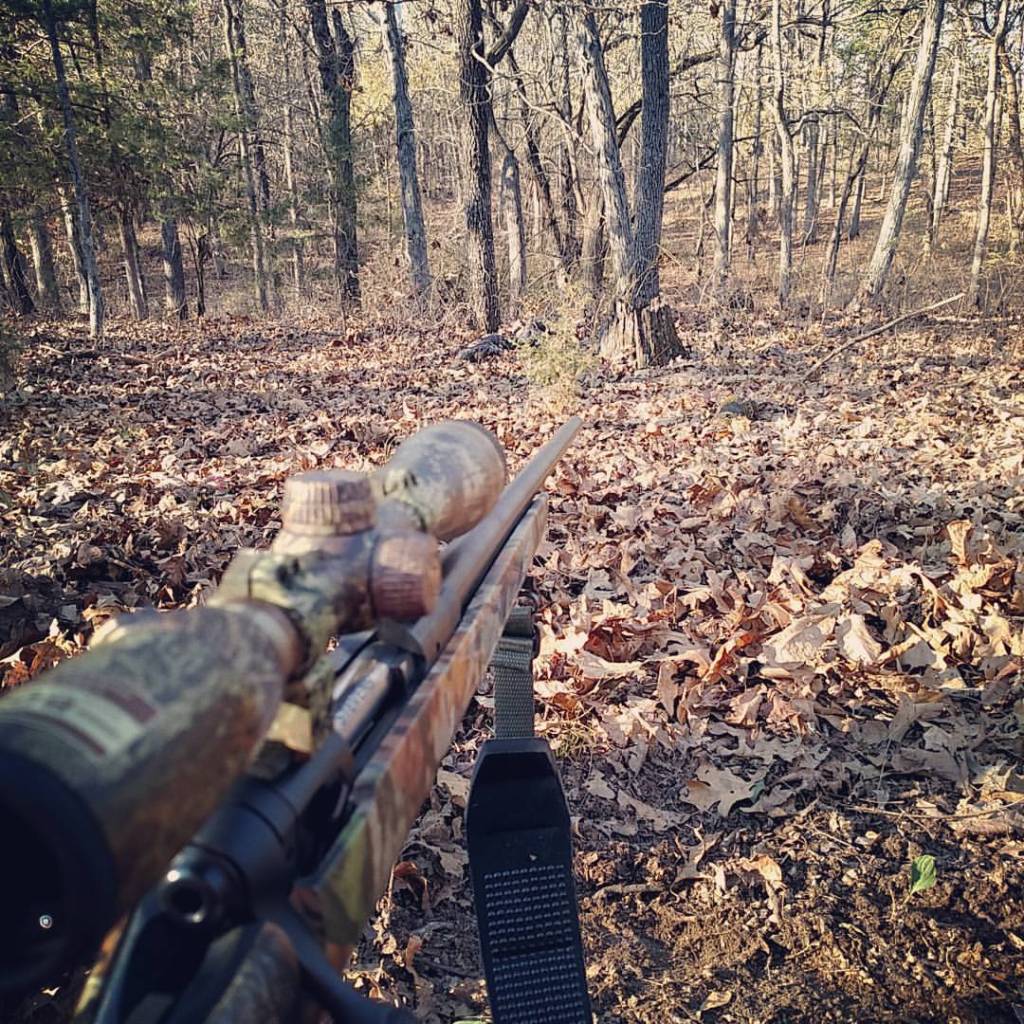
I Have Harvested Deer with .223
I’ll start on a positive note by talking about my successes using my trusty .223 bolt action, which I have affectionately dubbed ‘Curiosity’ because, well, curiosity killed the cat. Although I’ve never actually killed a cat of any kind with her, so there is some irony in that, but I digress. The first deer Curiosity and I harvested was a small doe and if I’m being completely candid I don’t remember the exact ammunition I was using, just that it was 52 grains with some sort of ballistic tip. She came walking up the trail directly in front of me, and I fired on her at just inside 50 yards. She was facing me directly and there was no viable option for a broadside or quartering angle to take, so I lined up on the front of her chest. After I shot her she continued up the trail directly toward me, passing by me within about three yards which surprised the hell out of me, but as she ran past I could see blood pumping out of her chest in large volumes. Shortly after passing me she curled back down into the timber and went down in short fairly short order. As it turns out I had put a perfect shot right through her heart, which as hunter looking for a quick, clean kill, is pretty much exactly what you want. It didn’t drop her in her tracks, but she didn’t travel more than 75 yards either.
Curiosity also helped me bring down my first buck, and I do believe I shot him with one of those rounds from the aforementioned box of 52 grain ballistic tips. In this instance I was fueled by emotions and probably (definitely) rushed the shot, as it was my first antlered deer, as outlined in my previous story ‘Lifting the Curse.’ This was another shot taken around the 50 yard mark, maybe just a tick longer, and he was quartering to me with his right side. Since I was so focused on counting points per the Antler Point Restriction guidelines, the moment I counted four points on one side I yanked the crosshairs down to his body and squeezed the trigger. He ran up the hill to my right and stopped behind a tree, where I proceeded to take an ill-advised second shot at the back half of his body, as that was all of him that I could see (a shot that we would later determine was a miss, as he only had the one entry point upon discovery). He tumbled down the hill toward me, jumped back to his feet, and came back down the hill and disappeared into the brush in the direction that he had originally come out of. It took a team of my dad’s buddies and me to scour the woods in the darkness, but we did find him after a brief search. In total he probably ran about 150 yards. Albeit a rushed shot, my bullet managed to pierce through both lungs, ricochet off the inside of the ribcage on the far side, and come out through his chest. What is particularly interesting about this is that it exited through a thick wad of fat, which effectively plugged the hole and this coupled with the small entry point actually resulted in virtually no blood trail and thus made tracking (particularly in the dark) next to impossible. His chest cavity and punctured lungs filled with blood and essentially drowned him, and had I not spooked him with that second shot he probably would have gone down right there. Obviously this is less than ideal but it did ultimately result in a successful harvest.

I harvested another buck with that same ammunition a couple years later, and have also taken a couple of deer with 55 grain jacketed soft points, which I came to using immediately following the one major blunder I made when it comes to ammunition selection for deer hunting. I decided one year after getting in my own head and letting the words of my small caliber nay-sayers cloud my judgement in my decision to deer hunt with a small caliber and started exploring alternative ammunition options in .223. This led me to seeking higher grains and put me on the mindset of rapid-expansion, ultimately resulting in the purchase of a box of Hornady Critical Defense FTX rounds at 73 grains. Despite not having any issues with losing deer that I actually hit, I allowed my confidence to be shaken by the doubters and decided to try and fix that which was never actually broken. But in my defense I think my thought process was actually on the right track. I always considered the small entry wounds created by this small caliber along with the oft-times lack of an exit wound, which were particularly frustrating in cases where I needed to get on a blood trail to track the animal. This made me question some of my misses, that maybe I hadn’t missed and I just couldn’t ever find the blood trail. I felt that I needed something that was going to pack a bigger punch, do more damage, and generate heavier bleeding. I decided that something that would expand more rapidly would do more damage and bring deer down better, so I elected to go the route of the FTX rounds. This turned out to be a big mistake.
The One That Got Away
Sitting in the stand, I had a doe appear out of the brush about 40 yards in front of me. I raised Curiosity up and peered through the Nikon Coyote Special to get a bead on her. She’s kind of small I thought to myself and started the internal debate on whether or not to take her. She stepped forward and a second deer followed her into my view. Oh, that’s the yearling and this is mama, okay. But then that one stepped forward and third deer appeared. Mama and twins, alright, I’ll take her! Just as I was getting her lined up a fourth deer emerged. Thaaaaat’s mama! I knew immediately because suddenly the first three paled in size comparison to the fourth deer. She was a big doe, and I imagine she would have to be if she reared triplets. She was facing almost directly toward me, but quartering to just a little bit. I was contemplating a front chest shot or trying to get the quartering shot just past her front shoulder when she turned and presented a full side shot, which I gleefully took. She reeled from the impact of the FTX round and spun around and bolted off into the brush back up the trail. The most curious part was that of the three yearlings, only one high-tailed it out of there while one stood perfectly still and the other actually ran TOWARD me, circled my tree, and then ran back over to the other one. They stayed around as I gathered my gear and began climbing down, only finally leaving once I got to the bottom of the stand about 35 yards from them.
I made my way over and started looking for blood, which I found okay enough, but still not a great trail to follow. A little splatter here, a couple drops there, but I was having to really seek out the next blood spot in some fairly thick brush. I had a couple of buddies hunting a few hundred yards north of me, which is the direction she ran. As I tracked her trail, I heard Bryson boom off a round with his .30-06. In the ensuing text messages and a phone call, he informed that he had one down AND my doe had passed by his stand. He said that she had come through right by him, and her whole left side was just painted red with blood, so I quickly made my way over to his stand. It turns out that he got one of the yearlings and she didn’t go very far at all, dropping just 20 yards behind his stand. I picked back up on her blood trail where he pointed out that he had seen her, and followed it through the timber until it more-or-less ran out. Next thing we know, we hear Trevor shooting just about 150 yards over. He also knocked down one of the yearlings (which turned out to be a button buck) with his .30-30 lever action. He happened to see my deer running across the pasture, and in the open grass we were unable to find the trail and determined that she ran up and hopped the fence, making her way off of the property. This was the first time in my life that I shot a deer and could confirm hitting said deer, but never actually recovering it. To this day it still pains me to think about those events and how everything unfolded. Bryson thought about trying to finish her off for me, but with the amount of blood he felt certain she was going to go down eventually. Nonetheless, I learned my lesson and retired the FTXs and went to the store that same day and bought a box of 55 grain jacketed soft points. A week later I harvested an absolute horse of a doe with the new bullets and never looked back.

Final Analysis
As it turns out, for hunting deer you don’t necessarily want expansion so much as you want penetration. I learned this lesson the hard way and in doing so I hope that you don’t have to. I will still contend that the .223/5.56 calibers are sufficient for successfully harvesting deer, just so long as you choose the right type of ammunition for the job by focusing on velocity and penetration capabilities. Someday I will undoubtedly invest in a larger caliber rifle and perhaps finally put my mind totally at ease as far as my confidence is concerned, but for now I can know that my .223 is perfectly capable of putting deer down, just so long as I have the right rounds. I should also note that every one of these shots occurred inside 100 yards. I have not as of yet had the opportunity to gather any data on longer distance shots, so that may be something you take into consideration when reviewing and selecting specific types of ammunition. Nonetheless, if someone tells you that, “you can’t kill a deer with a .223/5.56” just know that it can and has been done, on deer of a variety of sizes and sexes. Best of luck on your next adventure into the deer woods!
 The Hunting Lodge
Shot placement is what’s important if you make a sketchy shot with a 300wm it’s not going to be much more forgiving than 556.
LikeLike