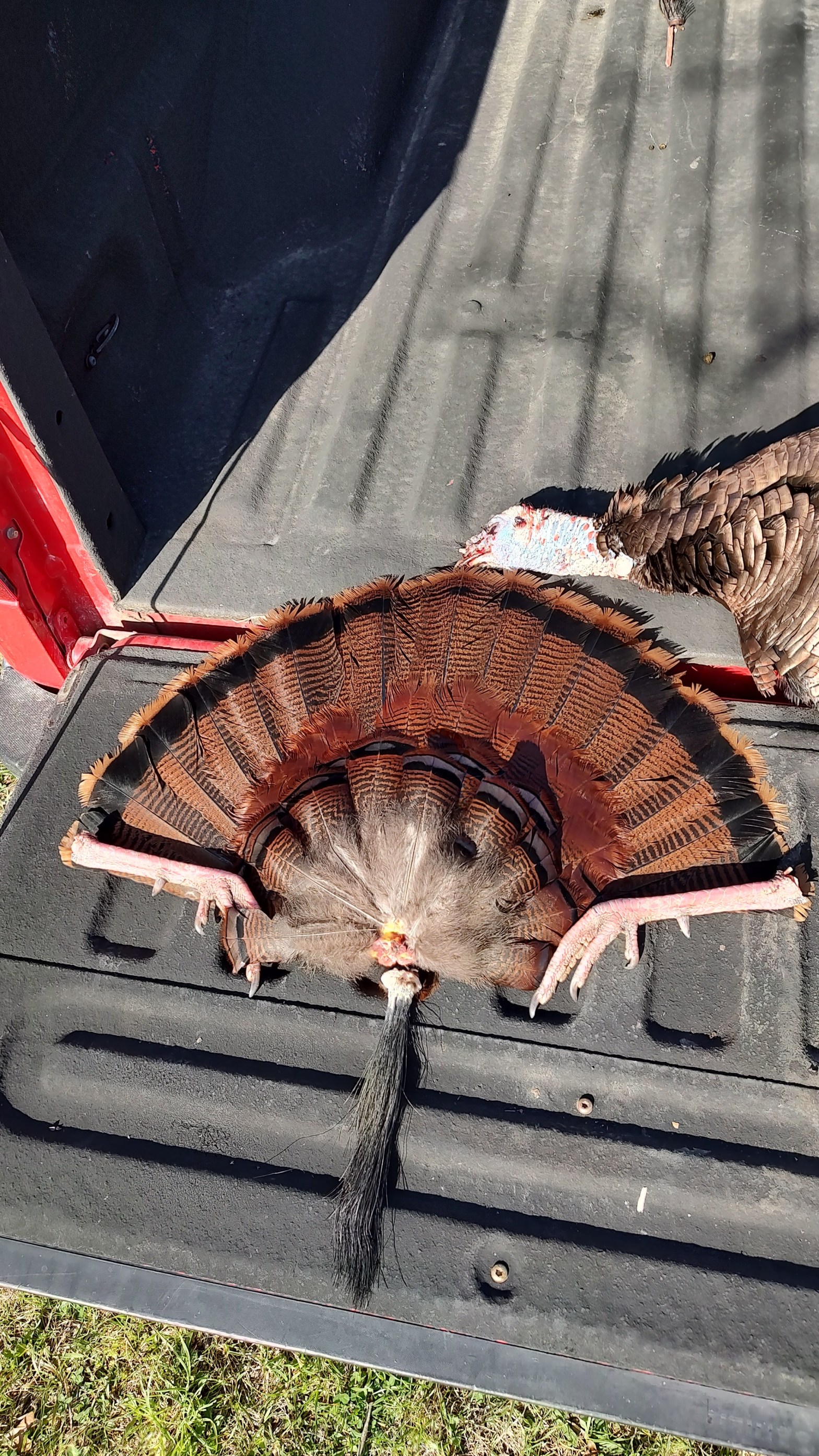
A Blue Oyster Cult classic, a prescription for more cowbell, and of course, the hottest topic at hand in the hunting community in light of the growing popularity of this method of hunting turkeys. With the Tennessee Fish and Wildlife Commission recently outlawing reaping/fanning on public land in the state (among other regulation changes) the debate over its impact on turkey populations as well as hunter ethics rages on within hunting circles across the country. While I could just as easily join the merry mob and inject my own thoughts and opinions into the subject, and those will undoubtedly bleed through this article as I go, I would also like to try and approach this topic from a somewhat different angle and offer some insight into how agencies like the TFWC should probably be implementing public policy. I should also note that I have not personally reaped a turkey, so if you are wholly uninterested in hearing the musings of someone who hasn’t even “been there” then you are welcome to bow out before we go any further.
A Brief Background on ‘Reaping’
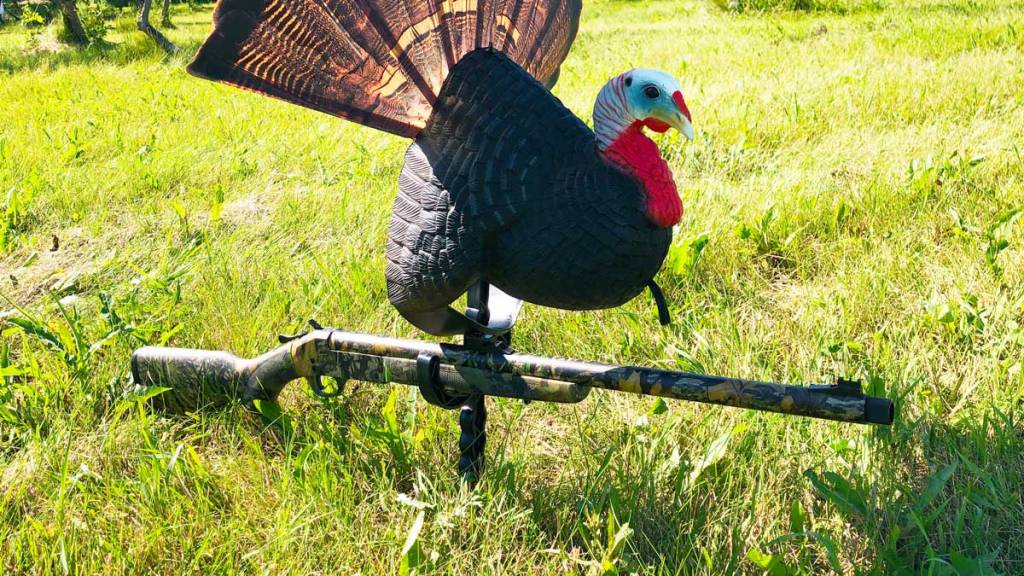
Before I go too far down this rabbit hole, I should pause for a moment to briefly describe what reaping is for anyone who may be unfamiliar. Reaping (also known as ‘fanning’ or ‘scoot-n-shoot’) is a style of turkey hunting where the hunter uses a turkey fan (some synthetic, some real) and/or a decoy like a shield, crouching or crawling behind it (or even mounting directly to the barrel of their gun) to get as close as possible to a gobbler by posing as another male coming to compete for area hens in order to harvest him at an incredibly close distance. As the reaping method has gained popularity in recent years, companies have capitalized on the growing market by developing products specifically designed for this style of hunting, such as the aforementioned gun mount and synthetic fans with viewing slots cut out.
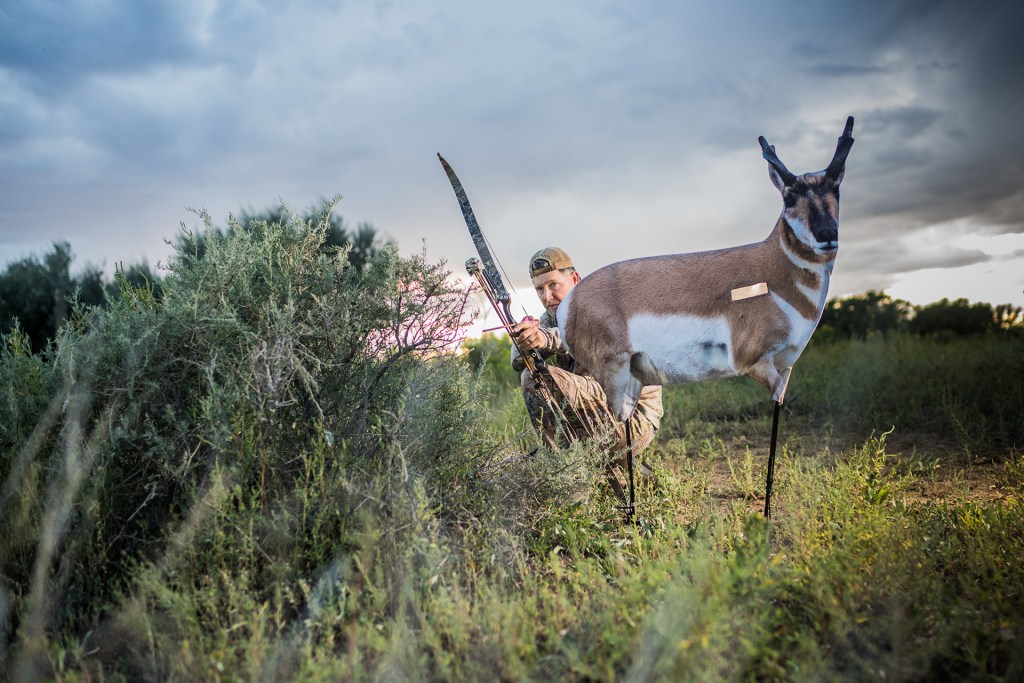
Is this method new? Not necessarily, it has just exploded in popularity in the last decade thanks in large part to various platforms of social media and television personalities showcasing their success with it. It’s also not exclusive to turkey hunting, but perhaps an adaptation of a style of hunting that has long existed on the open plains of the western states for big game such as pronghorn and deer, where suitable cover is virtually nonexistent. Often times in these cases the decoys/cutouts are used by archery hunters who don’t have the luxury of shooting long distance.
Is reaping the only way to successfully hunt turkeys? Obviously not, it’s just one of several strategies that hunters use. ‘Traditional’ turkey hunting, for lack of a better term, is generally more stationary. A hunter goes into an area and sets up on the ground or in a blind and uses calls and decoys to draw the birds to them. Sometimes a hunter will go in the evening prior to a hunt and “put the birds to bed” which involves locating and physically watching the birds go to roost for the night. This provides the opportunity for the hunter to come in the next morning and set up shop extremely close to the birds and hopefully bring them right in off the roost at first light. Finally there is the method of spot-and-stalk, which can be utilized in conjunction with reaping to find and get close to a gobbler by remaining mobile and moving across the terrain.
What’s the Problem?
Opponents of reaping have two primary arguments against it as a viable method of turkey hunting, both of which are valid in their own rights as things that every hunter must consider regardless of the game they are pursuing. These two arguments have become the central focus of much of the debate surrounding reaping, and they are now at the forefront of shaping policies across multiple state agencies and programs.
The first argument is that reaping violates the principle of ‘fair chase’ in hunting, which gives credence to the understanding that by way of modern technology, humans have a distinct advantage over wildlife that more than make up for the array of disadvantages we would otherwise have on a level playing field. Hunters that adhere to this principle recognize and utilize many of the technological advantages at their disposal, but stop themselves short of doing so in a way that completely negates any kind of challenge or required skill set. Implementing fair chase can look different for different hunters, largely dependent on what degree of challenge they seek. Some hunters restrict themselves to archery only, believing that using a rifle or other type of firearm makes hunting too easy. Some waterfowl hunters are firmly against the use of spinning wing and other motion-type decoys, subscribing to a more “old school” style of hunting that relies more heavily on the ability to call birds in. The same can be said of some turkey hunters, primarily those that oppose reaping.
Is it reasonable to assume, based on the description given above of what reaping/fanning is that it could lead to a higher rate of hunter harvest? Sure it is, but what does the data say? Is there data, one way or the other, that clearly outlines any kind of impact on success rates? If it exists, I can’t seem to find where it’s hidden. Furthermore I would like to see some more reliable data on what percentage of turkey hunters use/have used the method of reaping to successfully harvest a bird, how frequently those hunters use it (is it their exclusive method or do they only use it some of the time), and what their success rate has been on an individual basis. These kinds of inquiries are important because even if reaping does carry a significantly higher success rate, are there enough hunters actually doing it (and doing it often enough) to have a notable impact on annual harvest numbers, so much so that it is contributing to the overall decline of wild turkey populations?
One contributing factor to the public perception of the success rates of reaping is also one of the driving forces behind its rise in popularity, which is how it has been showcased across social media and television. Hunting shows and hunting pages are generally driven by success, so it would make practical sense that most of what makes it into the final cut that gets posted and distributed are successful hunts that result in the harvesting of an animal. I think it is possible because most of what we see are successful hunts that it may skew our perception of its effectiveness, which in turn lends itself to generating a reaction (one way or the other) of emotion towards reaping. As with any other form of public policy implementation, rarely is it advised to act on emotion over quantifiable data and facts. That’s not to say that having an emotional reaction to something is necessarily a negative thing. You can use that emotion as a motivator to point you in the direction of the data needed to substantiate what you believe might be the case. You just have to leave yourself open to the possibility that you may ultimately be wrong about your initial emotional assertion.
The second argument is a prevalent and extremely justifiable one of safety. Proponents of the safety (or a lack thereof) concerns surrounding reaping identify this method as an invitation to hunters unintentionally shooting one another. The U.S. Fish and Wildlife Service estimates that more than 2.5 million hunters in the United States pursue turkeys annually. With that many turkey hunters in the woods accidents are bound to happen, and studies have indicated that turkey hunting as a whole carries some of the highest frequencies of hunter incidents. It makes sense that someone could potentially mistake a reaper for a turkey on the premise that “if it’s walking like a turkey and talking like a turkey, then it just may well be a turkey”. Given that many states do not include any blaze orange or other type of identifying markers in their turkey regulations, it can certainly be argued that a well-camouflaged hunter may not be as easily seen behind a decoy and/or fan.
“Hunting requires discipline and patience, because being anything less than 100% sure of your shot means your shot is anything more than 0% safe, and that risk simply cannot be outweighed by the reward.”
Much of the safety argument can be addressed through sound hunter education and following some of the most basic tenets of hunter safety, primarily the practice of identifying your target AND what lies beyond it. Hunting requires discipline and patience, because being anything less than 100% sure of your shot means your shot is anything more than 0% safe, and that risk simply cannot be outweighed by the reward. For example I ended up in a situation this past turkey season where a bird seemed to magically appear about 40 yards away from me through the brush, and was so spectacularly motionless for so long after I finally noticed him that it resulted in a nearly 20 minute staring contest between the two of us before I was able to A) positively identify a beard and B) be absolutely certain that what I was looking at was not somebody’s decoy. I was fully prepared to lose out on the opportunity to harvest that bird if I was not absolutely certain that it was a real live turkey and there was no chance of accidentally shooting another hunter.
Implementing Public Policy
In states like Tennessee, the data is clear about one thing; turkey populations are declining, and state game commissions are actively working to reverse that problem. Where the data is less clear and in some cases sorely lacking, however is in the causation vs. correlation argument centered on reaping and fanning and its effectiveness as a hunting method. Data connecting reaping and fanning to an increase in hunting related incidents of injury is, at best, speculative given that we are rarely privy to the intricate details of exactly HOW a hunting incident occurred, just THAT it occurred and as I noted earlier turkey hunting typically carries a higher rate of incident than other forms of hunting.
Something else to keep in mind with Tennessee’s recent outlawing of reaping on public land is that this is just one of several regulation changes going into effect starting in 2023. They also expanded trapping notorious nest predators (raccoons and opossums) to allow year-round trapping of those species, reduced the number of birds hunters can harvest (from 3 down to 2, and can only include 1 jake), and pushed the start of the season back two weeks. All of these seem like reasonable adjustments in the face of a declining turkey population, and certainly have the potential to have a positive impact on turkey numbers going forward. Tennessee is taking multiple big swings at regulation changes, attacking the issue from many different angles.
My fear with this, however, is that with the reaping ban coming to the forefront of the conversation, it will garner more praise than it deserves should Tennessee successfully recover their turkey numbers in coming years. This could result in an unnecessary domino effect in which other states seek to outlaw reaping, pointing to Tennessee as an example of why they should. Conversely, if the numbers do not reverse course, the reaping ban will likely face greater scrutiny than it is due compared to the other policy changes. Each and every one of these policies carry the ability to have a significant impact on what happens with Tennessee’s turkey population over the next few years, and it will be important to quantify their respective effects individually, and I don’t know how you could gather that sort of data with any degree of accuracy when you implement them all together at the same time.
As a general rule when it comes to imposing and enforcing matters of public policy, one should always be able to substantiate and justify their position with clear cut data. State game, fish, and wildlife agencies are (or at least are supposed to be) agencies of biological science. That biological science and the myriad of scientific processes that come along with it ought to be utilized when shaping any type of public policy, whether it be hunting season lengths, bag limits, or harvest methods, generally compiling data across multiple avenues to back up and support a well-developed and sound policy before it is ever implemented. It must be analyzed and scrutinized from every angle and to every degree prior to being imposed on the general public. You need to be prepared with an air-tight defense of any policy in order to minimize the potential for any blowback or resistance that you may face. People may still not like a certain policy, but they will generally respect one that is well-reasoned and substantiated with hard data. Unfortunately in the case of Tennessee, I do not get the impression that such processes have been put into place ahead of the commission’s decision to prohibit reaping on public WMAs.
 The Hunting Lodge